Farming through uncertainty:
Why drones are becoming a critical tool in the UK’s changing climate
UK farming has always been shaped by the weather. But in recent years, that relationship
has become more volatile, less predictable, and increasingly unforgiving.
Extended wet periods, delayed drilling windows, and sudden disease pressures are no
longer exceptions, they are becoming the norm. For farmers, this introduces a new level
of operational risk: not just whether to act, but whether it is physically possible to do so
It is in this context that drones are gaining strategic importance
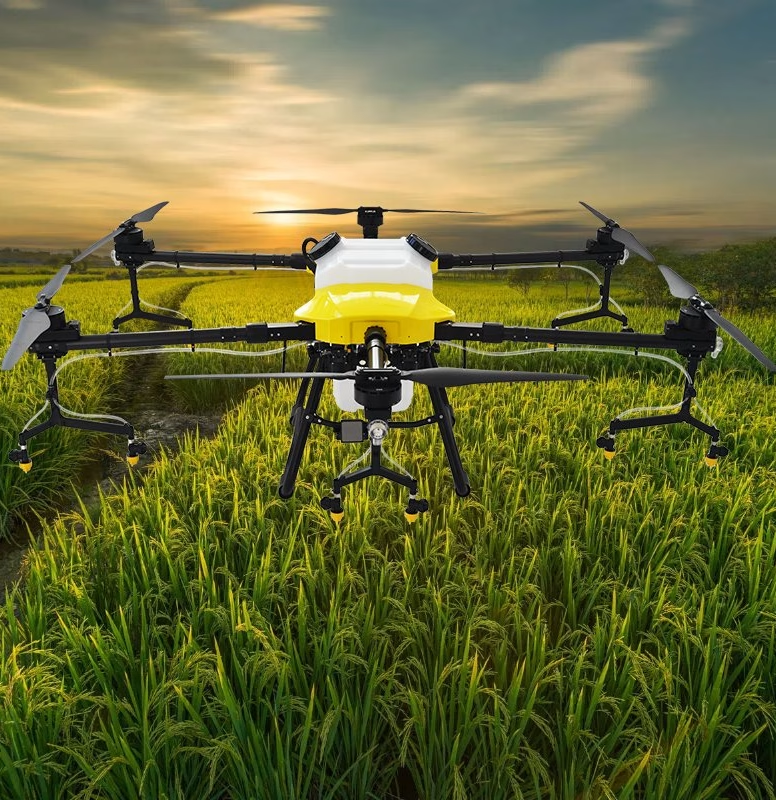
One of the most immediate advantages of drone technology is its ability to operate
independently of ground conditions. When fields are too wet to support machinery, an
increasingly common scenario, drones can continue to apply treatments, scout crops,
and monitor conditions. This capability effectively extends the workable window for key
operations, reducing the risk of missed interventions.
Timeliness is critical in modern agriculture. Fungicide applications, for example, are
highly sensitive to timing. Delays of even a few days can significantly reduce
effectiveness, allowing disease to establish and spread. By enabling rapid deployment,
drones provide a level of responsiveness that traditional methods struggle to match.
There is also a defensive dimension. Climate variability increases the likelihood of uneven
crop development within fields. Waterlogging in one area, drought stress in another,
these micro-variations are difficult to detect and even harder to manage with uniform
approaches. Drone mapping allows these variations to be identified early, enabling
targeted responses that mitigate loss.
Over time, this contributes to greater resilience. Not by eliminating risk, but by
improving the ability to respond to it.
The economic implications are significant. Yield variability is one of the most persistent challenges in UK farming, and one that is exacerbated by climate instability. By reducing the impact of adverse conditions, drones can help stabilise output and protect margins.
Drone technology delivers all three
As climate pressures intensify, the question is no longer whether farms can
benefit from greater precision and responsiveness. It is whether they can
remain competitive without it.
However, the broader shift is strategic. Farming is moving from a model of
planned operations to one of adaptive management—where decisions are
made dynamically in response to changing conditions. In this model, speed,
visibility, and flexibility are critical.