How Drones Are Reshaping Labour on UK Farms

How Drones Are Reshaping Labour on UK Farms

Farming more with less:
How drones are reshaping labour on UK Farms

Labour has become one of the most acute constraints in UK agriculture. Seasonal worker shortages, rising wage costs, and increasing operational complexity are forcing farmers to rethink how work gets done not just who does it. In this context, drones are emerging not as a technological novelty, but as a practical response to a structural problem.

Traditional farming operations are inherently labour-intensive. Spraying, for example, requires machinery, skilled operators, and often long hours to cover large areas within tight weather windows. When conditions shift—as they frequently do in the UK, the ability to respond quickly can be the difference between protecting yield and accepting loss.

Drone technology fundamentally changes this equation.

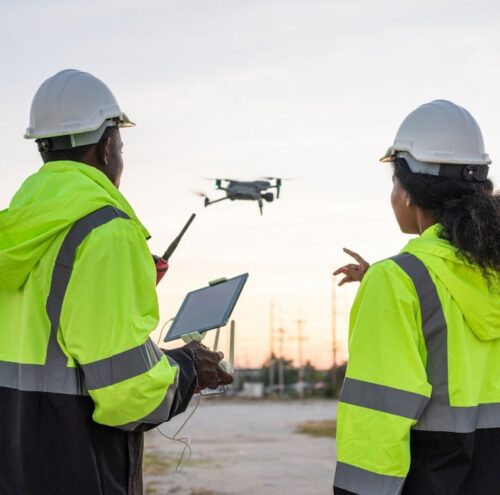
A single operator, equipped with a spraying drone, can treat areas that would otherwise require significantly more time, coordination, and manpower. Setup times are reduced, logistics are simplified, and the dependency on large machinery is diminished. In many cases, fields that are inaccessible to tractors due to wet conditions can still be treated by drone, maintaining operational continuity when it would otherwise stall.

This is not about replacing labour entirely. It is about amplifying it.

Farms adopting drone-based operations are finding that one skilled individual can effectively manage tasks that previously required multiple people. This is particularly valuable during peak periods, where labour bottlenecks are most acute. Rather than expanding headcount, farms can increase capacity through technology.

The broader impact of agricultural drones

There is also a qualitative shift in the nature of farm work. Drone operation requires a different skill set more technical, more data-driven, and less physically demanding. For a sector that has historically struggled to attract younger talent, this presents an opportunity to redefine the perception of
agricultural careers.

Importantly, the benefits extend beyond labour alone. Reduced machinery use lowers fuel consumption, minimises soil compaction, and decreases wear and tear on equipment. Over time, these secondary effects contribute to both cost savings and improved soil health.

Yet adoption remains uneven. For many farmers, the question is not whether drones can deliver value, but whether that value justifies the change. The answer increasingly depends on scale, crop type, and operational complexity.

What is clear, however, is that labour constraints are unlikely to ease. In that environment, technologies that enable farmers to do more with fewer resources will not just be advantageous; they will be essential.

Shopping Cart

No products in the cart.