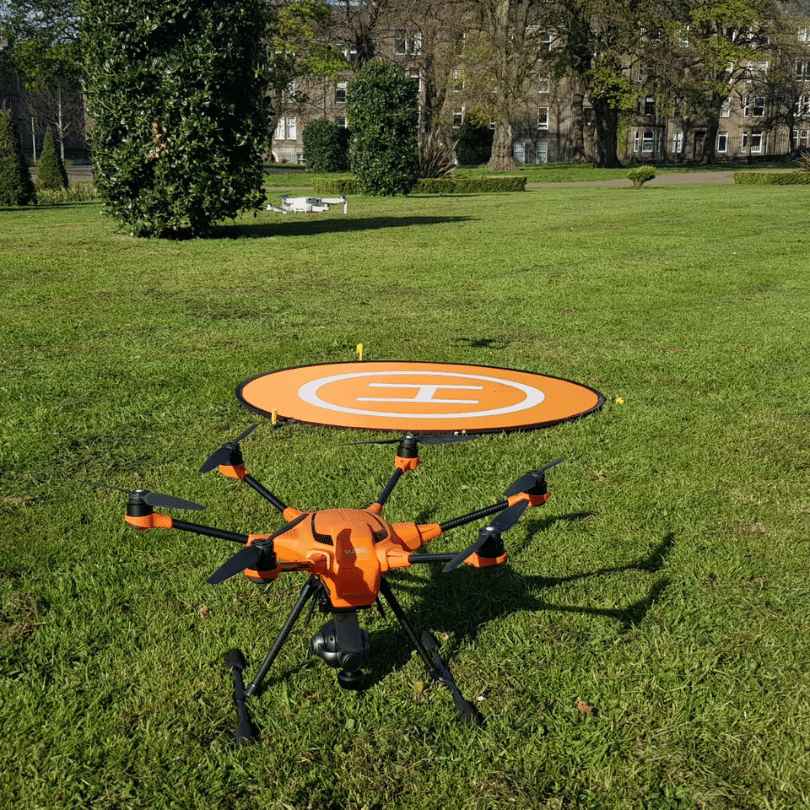
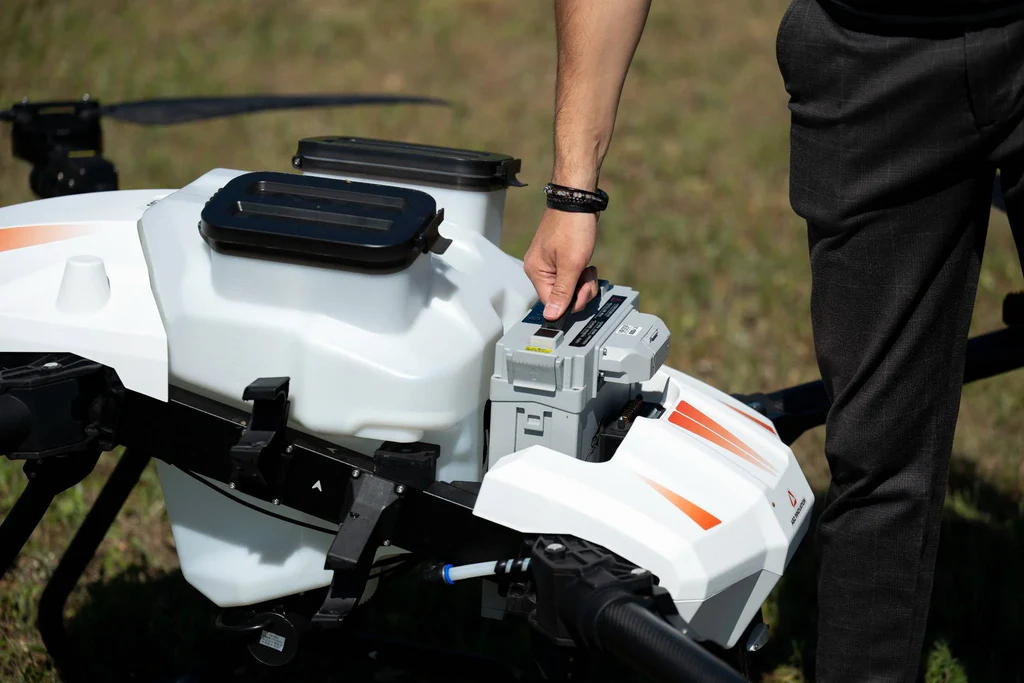
Drone spraying vs traditional methods:
A field-level reality check
The debate between drone spraying and traditional methods is often framed as a question of innovation versus convention. In practice, it is a question of efficiency, timing, and field impact.
For UK farmers, the answer is rarely binary. Instead, it lies in understanding where each approach delivers the greatest value.
The hidden cost of wheeling conventional boom sprayers remain highly effective across large, uniform fields, but they come with an unavoidable trade-off: wheeling. Across a typical arable field, wheeling can reduce cropped area by 3–7%, with additional yield penalties due to soil compaction. In high-value crops, this represents a meaningful loss of productive capacity.
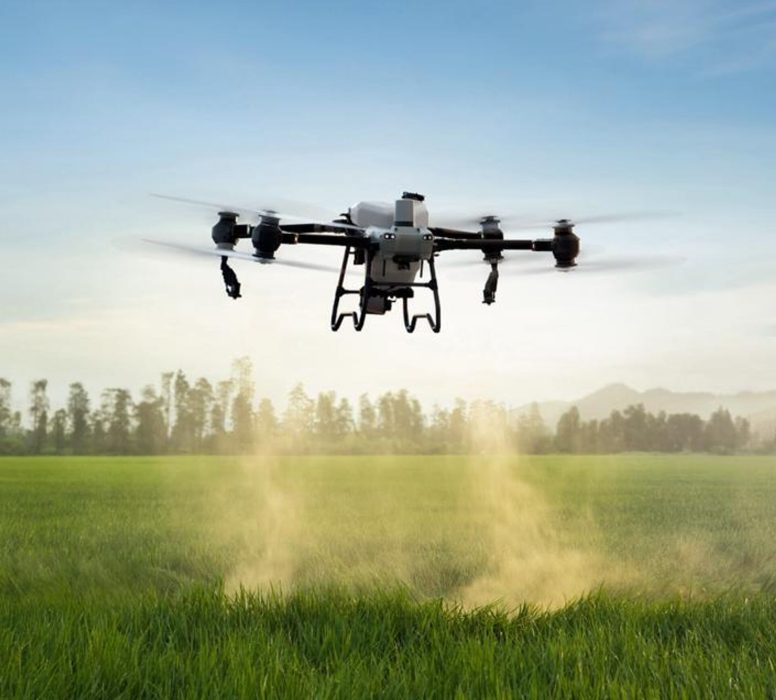
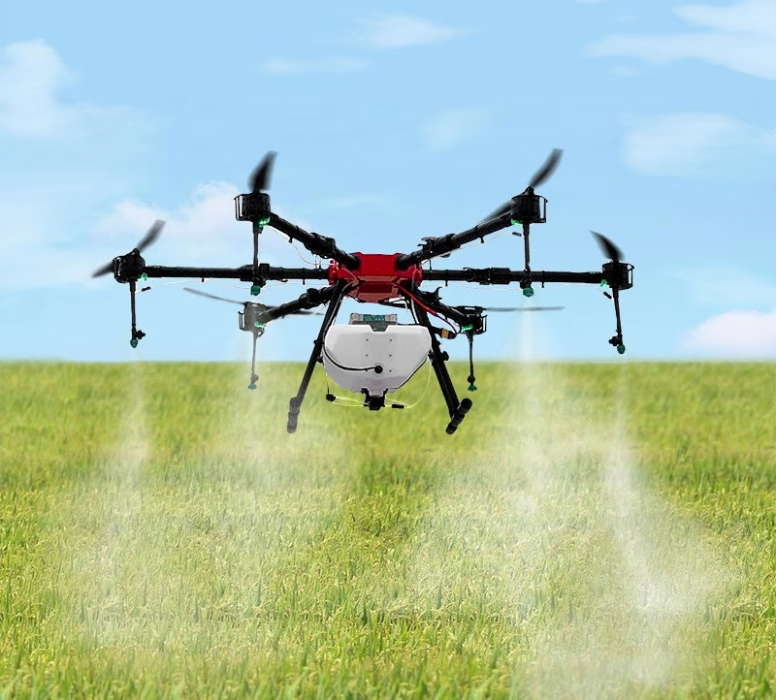
Drone spraying eliminates this issue entirely. With no ground contact, crops remain undisturbed, preserving both yield potential and soil structure.
Precision at the point of application
Traditional spraying systems are designed for coverage. Drone systems are designed for precision. Flying at low altitude and using controlled droplet application, drones can target specific zones within a field. When combined with prior mapping, this enables:
The result is not only lower input use, but also more effective application where it matters most.
When the field says “No”
UK farming is increasingly defined by weather volatility. Wet conditions can delay spraying operations for days, or even weeks. During these periods, tractors are either unable to enter fields or risk causing significant damage. Drones, by contrast, operate independently of ground conditions. This capability transforms operational flexibility. Farmers can respond to disease pressure or nutrient requirements in real time, rather than waiting for conditions to improve.
Labour and operational efficiency
Labour constraints are an ongoing challenge across UK agriculture. Skilled machinery operators are both scarce and costly. Drone operations require fewer personnel and can be deployed rapidly. A single operator can manage spraying across multiple fields with minimal setup time.
While drones may not yet match the hectare-per-hour capacity of large boom sprayers, their agility and responsiveness often offset this limitation, particularly in fragmented or difficult terrain.
Not a replacement, a complement
Despite their advantages, drones are unlikely to replace traditional spraying entirely in the near term. Instead, the most effective model is complementary use:
This hybrid approach allows farmers to optimise both cost and performance.
A shift in mindset
The emergence of drone spraying signals a broader shift in agriculture, from scale-driven efficiency to precision-driven efficiency.
The question is no longer how quickly a field can be sprayed, but how accurately inputs can be applied to maximise return. In that context, drones are not competing with tractors. They are redefining the rules by which performance is measured.